Wednesday, 3 December 2025

Community, Culture, and Migration: Malta Today

A sense of belonging is essential for everyone, particularly at a time when the identity we once knew has changed irreversibly. Many people feel unsettled by today’s realities, as nations grow increasingly cosmopolitan and diverse communities share the same space. Malta is no exception. Our small size makes these changes feel even more rapid and pronounced, as we catch up with experiences other countries have long faced. But must we simply accept this reality without question? Is there truly nothing we can do to influence or shape the path ahead?

Let us begin with a common argument: that the Maltese are somehow under threat because of the number of immigrants coming to the country. From there, we can examine whether any action is genuinely necessary, and if so, what can realistically be done.

First, it must be recognised that speaking of a “Maltese race” is nonsense. What unites us as a nation is our shared culture, not imagined racial purity. Our ancestors came from many places, and Malta’s identity has long been shaped by the movement of peoples across the Mediterranean. As a seafaring island, Malta has constantly interacted with and absorbed different communities. Under the Knights of St John, the island hosted knights from across Europe, each with their own commandery, bringing a steady flow of foreigners to our shores. From Africa, Spain, and Sicily to Britain during the colonial period, Maltese identity is the product of many peoples and cultures blending over centuries into a single, distinctive whole.

Malta, particularly the port areas, was already cosmopolitan during the time of the Order, and this diversity never harmed society. Some argue that these foreigners were Christians like us, but that is not entirely accurate. Slaves from various parts of the world lived in Malta, integrated with the population, raised families, and, once slavery was abolished under the French, became Maltese themselves. They adopted the language, customs, and daily rhythms of life, blending seamlessly into the national fabric over generations.

So what makes today different from the past? Why does the arrival of third-country nationals unsettle so many people? The answer is clear. In earlier times, newcomers arrived for very different reasons, the islands were far less populated, and integration into the existing social fabric was easier. Travel then took months under perilous conditions at sea, meaning those who arrived tended to stay permanently and gradually became part of the wider community.

Today, most foreigners who come to Malta stay only two or three years, bringing little of their own culture and contributing minimally to our cultural heritage. While some settle permanently, the majority form part of a revolving-door system: they arrive, remain for a short period, then leave, replaced by others. The long-standing, stable communities of the past have largely disappeared. Numbers continue to rise, leading to overpopulation and a decline in civic pride. Many come simply to earn money, contribute to the economy, and move on, eroding the sense of a connected, enduring community.

The growing population in an already densely populated country has placed significant strain on Malta’s environment. Weak infrastructure has compounded the problem, particularly in areas such as traffic management, healthcare, and waste disposal. Limited space has led to overcrowding, poor air quality, and a general decline in living conditions. As a result, business interests increasingly take precedence over community life, with the wellbeing of residents often treated as secondary. Economic


growth has become the primary focus, even when it comes at the expense of quality of life. Indeed, an economy can expand too quickly and become too large for a country the size of Malta to manage effectively.

In conclusion, Malta’s identity has always been shaped by the blending of diverse peoples and cultures. While history shows that integration was once a natural and lasting process, today’s patterns of short-term migration, rapid population growth, and limited space present challenges that cannot be ignored. A sense of belonging, community, and civic pride is vital for the wellbeing of our society. It is not a question of rejecting newcomers, but of managing change thoughtfully, ensuring that Malta remains a place where culture, environment, and human connection are preserved alongside economic growth. By striking this balance, we can safeguard the qualities that make Malta unique, while embracing the opportunities that a diverse and dynamic society can offer.


Monday, 20 October 2025

Dr. Borg’s Four-Day Week: Evidence, Feasibility, and Common Sense

 Much has been said about PN Leader Dr. Alex Borg’s proposal for a four-day work week. Several entities, including the Malta Chamber of Commerce, have offered uninformed criticism, arguing that a national socio-economic study should first be conducted, taking into account productivity, output, labour costs, and international competitiveness. Some even went as far as calling Dr. Borg’s proposal “populist.”

Little do they realise that the study is inherent within the pilot project itself, and that calling for another study beyond such practical trials is unnecessary. They also fail to understand that such initiatives typically involve companies volunteering to participate, which naturally helps determine whether the approach is feasible across different business types. Dr. Borg never proposed a national trial, and presenting it as such is both hasty and misguided. In fact, the proposal clearly stated that the initial pilot project would take place in the public sector, and that when it extends to the private sector, participation would be voluntary and tailored to the specific needs of each company.

To understand how such a study is normally conducted, consider a practical example from the UK. Between June and December 2022, 66 companies with 2,900 workers participated in a pilot project. Rather than a national-level discussion, the study included a two-month preparation program for participants. Rejecting a one-size-fits-all approach, each company designed its own four-day work week according to its specific needs. Ultimately, 56 of the 66 companies chose to maintain the system permanently. The remaining companies did not, underscoring that participation was voluntary, contrary to some claims. Clearly, there is no single system that fits all companies.

This demonstrates that a national socio-economic study, detached from the pilot project, makes little sense. Dr. Borg’s proposal is only the beginning of a process, yet the impatience of some and the opportunism of others seem to demand the full methodology be presented upfront. As an innovative politician, Dr. Borg is exploring ways to balance work and personal life, allowing people to live and care for their families. The notion of living solely to work is a bleak conception of human life. Moreover, this system could help reduce traffic on our streets, especially if paired with a rethink of how public transport operates.

Work-life balance lies at the heart of PN’s politics, which holds that the dignity of every human being must come first. Dismissing a proposal before it even begins is hardly a way to prioritize people over profit. It is high time that the Malta Chamber of Commerce also recognized its importance.

Monday, 1 September 2025

Kevin Wain: Why I Am Supporting Dr. Alex Borg

Kevin Wain: Why I Am Supporting Dr. Alex Borg:  My endorsement for Dr. Alex Borg stems from the belief that he is the only candidate capable of delivering genuine reform within the party,...

Why I Am Supporting Dr. Alex Borg

 My endorsement for Dr. Alex Borg stems from the belief that he is the only candidate capable of delivering genuine reform within the party, particularly in how we communicate the PN's message. While he has put forward a wide range of proposals, the way these ideas are presented is just as important as their content. The era of beating around the bush, fiery rhetoric, and long-winded explanations at activities is over. Today, people want clear, concise messages supported by more detailed documents they can access and review. Too often, lengthy speeches are mistaken for substance, when in truth they add little value. What people truly want are politicians who listen to them and whose policies genuinely reflect their needs. This is precisely what Dr. Borg offers.

Resistance to change is often the first reaction, and at times this resistance is little more than a strategy to score political points. Dr. Borg has put forward a number of proposals aimed at strengthening the party structurally. Yet during the debate, it was Dr. Adrian Delia who argued that the statute does not allow such reforms. This creates the impression that the party exists to serve the statute, rather than the statute serving the party. Blocking reform on such grounds is both self-defeating and stifling, it certainly does not help the PN move forward.

One example is Dr. Borg’s proposal for the PN to appoint a CEO responsible for the party’s commercial affairs, thus allowing the Secretary General to dedicate more time to his political role. Critics, including Dr. Delia during the first debate, twisted this into an accusation that Dr. Borg wants to diminish the role of the Secretary General, when in fact his goal is to strengthen it. Furthermore, Dr. Borg strongly supports decentralizing the leadership structure, including empowering the Deputy Leader, in order to make the party more effective.

It is worth recalling that during Dr. Simon Busuttil’s leadership, reforms of this nature were carried out without the statute serving as an obstacle. For this reason, the claim, started by Dr. Delia in the debate that Dr. Borg’s reforms cannot materialize because they are blocked by the statute is nothing more than spin, repeated endlessly in the hope that people will start to believe it.

As leader, Dr. Borg will ensure that our party becomes more inclusive, embracing people from all walks of life. He firmly believes that the PN should be a home for anyone who wishes to contribute toward a better Malta. His proposals reflect this vision, ranging from social reforms that support young people striving to buy their first home, to measures that address the needs of pensioners born before 1962. Moreover, he recognizes the urgent need for a comprehensive development plan that safeguards our environment and secures a better future for the country.

These elections are the PN’s chance to truly regenerate itself, and we must not let this opportunity slip away. I appeal to all tesserati who have not yet voted, or who remain undecided, to place their trust in Dr. Alex Borg, for the future of our party and our country.


Tuesday, 15 July 2025

Building a Sustainable Malta: Preserving Land, Livelihoods, and Legacy

We are living in a time when Malta’s environment is under increasing strain. Air quality is deteriorating, green spaces are shrinking, and the balance between rapid development and the wellbeing of citizens is all but lost. Yet, we cannot ignore that construction plays a crucial role in our economy. It generates employment, creates wealth, and supports a range of industries. The challenge, therefore, is not whether to build, but how 
we build—and at what cost to our environment and quality of life.


Can sustainable development truly be achieved in a country with limited space? Can a construction industry flourish while respecting our landscapes, heritage, and community needs? The answer is yes—but only if we adopt long-term thinking, careful planning, and a clear vision of the Malta we wish to leave to future generations.

We must ask ourselves: Do we want a country overwhelmed by buildings, where human wellbeing is secondary to profit? Or do we aim for a future in which quality takes precedence over quantity—where development is shaped by today’s challenges and tomorrow’s hopes?

The time has come to re-evaluate our policies and align them with sustainability, liveability, and national interest. A first step is to carry out a comprehensive assessment of every town and village. This means drawing up a detailed inventory of buildings—whether occupied or not—and, crucially, evaluating their historical and aesthetic value. Such a database would guide local planning, preservation, and regeneration strategies.

Each locality should be required to develop its own open space plan, proportionate to its size and character. Urban areas need forestation and recreational zones to support the health and wellbeing of residents. Abandoned or derelict buildings must be addressed. Owners should be given a clear choice: restore and repurpose, or, where no historical or architectural value exists, allow for replacement—but only following review by an expert aesthetic commission.

Rather than endlessly expanding into untouched land, the construction sector should shift focus toward renewal—revitalising what already exists. There is ample scope for development through restoration and adaptive reuse, ensuring that the industry remains active while protecting our limited land resources.

Public land within development zones that lies abandoned or underutilised should be transformed into public gardens and green areas. Here, the private sector can play a valuable role—working in partnership with government to create accessible spaces filled with endemic trees, play areas, and places for community life. Government should also consider acquiring privately owned land where necessary to expand public green infrastructure. A greener Malta is not just an environmental aspiration—it is a national priority.

This vision must also extend to our rural areas. The future of Maltese agriculture depends not only on financial support—such as EU funds through the Rural Development Programme—but also on robust policies that prevent misuse of farmland. Too often, plots cultivated for generations are being sold to buyers with no real farming intentions, who then repurpose them into private retreats or pseudo-agritourism venues.

To stop this trend, government must introduce legal safeguards that define “active farming” and restrict the transfer of agricultural land to non-farmers, except under strict regulatory review. Loopholes allowing farmland to be disguised as recreational property must be closed. A national register of agricultural land should be created to monitor ownership and usage, with regular inspections of land benefitting from public support. Where abuse is found, enforcement and penalties must follow.

If Malta is to move forward with dignity, we must make deliberate choices—choices that prioritise long-term wellbeing over short-term gain. Our future depends on how we use the land we have, how we value our environment, and how seriously we take our responsibility to preserve what is left—for ourselves, and for those yet to come.


Monday, 16 June 2025

A Time for Renewal: Reimagining the Nationalist Party for Malta's Future


Malta finds itself at a pivotal crossroads — a moment not merely for reflection, but for renewal. After years under the same administration, many feel a sense of fatigue and disillusionment, as though meaningful change has slipped out of reach. Yet it is precisely in such times of widespread resignation that the opportunity for reinvention becomes most vital.

For the Nationalist Party (PN), this is more than a political challenge; it is a historic opportunity to reimagine itself as a modern, centrist force rooted in credibility, compassion, and vision. The party must present clear, practical alternatives to the status quo — alternatives that inspire trust and reignite the belief that better is possible. The current situation is not the best we can expect, and a higher quality of life is not a utopian dream. It is within our grasp.

To truly become a vehicle for progress, however, the PN must also undergo a fundamental shift in how it views Malta’s evolving identity, particularly in relation to immigration. The legacy of immigration should not be seen through a lens of fear or as a burden, but rather as an opportunity — a chance to enrich our islands economically, culturally, and socially.

This calls for a decisive break from the current government's model of cosmopolitanism, which is largely transactional, driven by short-term economic interests, and indifferent to the deeper needs of national cohesion. Instead, we must embrace a more meaningful form of cosmopolitanism — one grounded in cultural dialogue, mutual respect, and shared growth.

This deeper integration cannot be imposed from above. It must be organic and respectful of Malta’s cultural continuity. New influences should be woven gradually into our national narrative, not forced upon it. A living culture must evolve naturally, absorbing those elements that resonate with its core, while leaving others to be explored in time, if and when the collective story is ready to embrace them.

Investment in community-driven cultural initiatives will be key to fostering this mutual understanding. The PN can lead the way by championing policies that bring communities together — not just geographically, but socially and spiritually. Integration must become a process of enrichment, not erasure.

At the same time, the PN must speak clearly and boldly about the issues that weigh most heavily on people’s everyday lives. Affordable housing should not feel like a lost cause. The unchecked, chaotic construction that has consumed much of our landscape must be brought to an end. These are not unsolvable problems. Real, workable solutions are possible — but they require leadership with the courage to prioritise long-term well-being over short-term profit.

Under the current Labour administration, the economy appears dangerously over-reliant on mass immigration and speculative development. We are led to believe that without an endless influx of cheap labour and constant building, our economy would collapse. But this is a false dichotomy. Sustainability and prosperity can — and must — go hand in hand.

Nowhere is this imbalance more visible than in our tourism model. While tourism remains a critical sector, the focus on mass tourism — particularly nightlife-oriented and short-term rentals — has eroded the quality of life for residents. Malta is too often sold as a party destination, creating the illusion of a country in perpetual celebration. Meanwhile, communities are left to deal with noise, overcrowding, rising rents, and a sense that their voices no longer matter.

The PN must challenge this model and advocate for a more sustainable, community-conscious tourism strategy — one that values both the visitor and the resident, and that prioritises cultural and environmental integrity over fast profit.

This is the moment for the Nationalist Party to redefine itself — not only as an electoral alternative but as a beacon of hope and responsibility. By embracing a forward-looking, centrist vision that promotes cultural inclusion, sustainable development, and social justice, the PN can once again become a party that not only responds to the needs of today but lays the foundations for a better tomorrow.

Change is not only necessary — it is still possible.

Monday, 9 June 2025

Tradition, Sovereignty, and Renewal: A New Path for the Nationalist Party


Between Tradition and Renewal: The PN’s Struggle for Relevance in a Changing Malta

The Malta Today results did not come as a surprise to the PN—it was actually anticipated. Current trends appear to be working against the party. Despite a decline in quality of life due to the country's overcrowding, the economy continues to perform well. In such circumstances, it is difficult for any opposition to succeed without the creativity needed to overcome the situation. To make matters worse for the PN, the party's financial situation appears to be a central factor contributing to its current troubles. Another challenge for the party is finding a centre ground that aligns with its identity—one that doesn’t alienate its grassroots supporters while still appealing to new voters. Striking this balance is no easy task. A party that has succeeded in attracting both liberal and Catholic voters—much like during the tenure of Eddie Fenech Adami—must now find common ground, positioning itself as a conservative party capable of representing a wide spectrum of society.


Reclaiming Public Services: Restoring Integrity, Sovereignty, and Social Responsibility

The PN should firmly assert that essential services must remain under state control, because unlike private companies, the state has no profit motive—its only responsibility is to serve the needs of the people. It is unacceptable that €400 million were lost in deals like those with Vitals and Steward, when those funds could have been used to improve the lives of the most vulnerable, particularly the sick. A strong, publicly run hospital system ensures that patients receive care based on need, not profit, and keeps corrupt business interests out of healthcare.

In many countries, people take pride in their national health services—pride that has been eroded in Malta under a Labour government. The PN must show the people that this pride can be restored, and that Malta can once again have a healthcare system that works for everyone.

But it’s not just healthcare. The energy sector has also been compromised. Is it really acceptable that 33% of Enemalta is owned by a Chinese state company? To make matters worse, this deal has been mired in allegations of offshore accounts, kickbacks, and shady dealings. It’s possible that the country lost €7.4 million and $5 million through these arrangements—money that should have gone into improving our energy infrastructure, not lining the pockets of the few.

And beyond the financial loss, there is a deeper concern: a foreign government, through its state-owned enterprises, now holds influence over Malta’s electricity supply. This raises serious questions about sovereignty, transparency, and long-term national interest. The PN must commit to regaining control of our essential services, restoring accountability, and putting the Maltese people—not foreign states or corrupt business networks—at the heart of public policy.


A Vision for Sustainable Growth and National Renewal

The PN must put forward a clear, forward-looking plan for Malta—one that directly addresses the problems created by Labour’s economic model, which has favoured quantity over quality. What the country needs is a strategy focused on sustainable growth, improved infrastructure, and a renewed commitment to preserving both our environment and cultural heritage.

This plan should include the creation of new open spaces in overdeveloped urban areas and the protection of our rural landscapes from further degradation. A more environmentally conscious approach—clearly defined and professionally guided—would show that the PN is serious about long-term quality of life, not just short-term gains.

Equally important is addressing the country’s growing traffic crisis. The PN must champion a strong public transport strategy, developed in consultation with experts in the field, to provide efficient and reliable alternatives to private car use. Reducing congestion and pollution must be a core part of this vision.

At the heart of this plan should be a shift in economic direction: away from a system reliant on imported cheap labour, and towards one that prioritises high-quality, well-paid jobs. New economic projects should aim to attract innovation, talent, and investment that uplifts the country, not strains its resources.

This kind of model will not only raise living standards, but will also ease the pressure on our population by discouraging unsustainable growth. It offers a more balanced future—one that delivers opportunities for citizens and foreign residents alike, while restoring dignity and direction to the national economy.


Balancing Belief and Progress: A Pragmatic Path for the PN

 The PN has long grappled with the challenge of balancing the support of its traditional Catholic base with that of more liberal-minded voters. To remain relevant and representative, the party must adopt a pragmatic approach that respects and includes both perspectives.

The PN must position itself as a future government for all—Catholics, people of other faiths, and non-believers alike. It should reflect the diversity of Maltese society, while still acknowledging and respecting the values of its more conservative grassroots. One way to achieve this balance is by introducing the principle of a free vote on matters of personal morality.

It is essential that the party’s parliamentary group includes individuals who represent the broad spectrum of Maltese public opinion—from conservatives to liberals. This ensures that Catholic voters see their views represented, while also allowing space for differing positions. When it comes to matters of conscience, imposing a uniform party line risks alienating those whose convictions are deeply rooted in their faith.

The PN should therefore focus on being an inclusive political movement—one that unites around common policy goals while allowing room for individual freedom on moral issues. The real debate within the party should be centred on political direction, governance, and national priorities—not moral doctrine.


Saturday, 7 June 2025

Sliema’s Struggles: Residents Left Behind by a Pro-Business Government


From Seaside Charm to Concrete Jungle

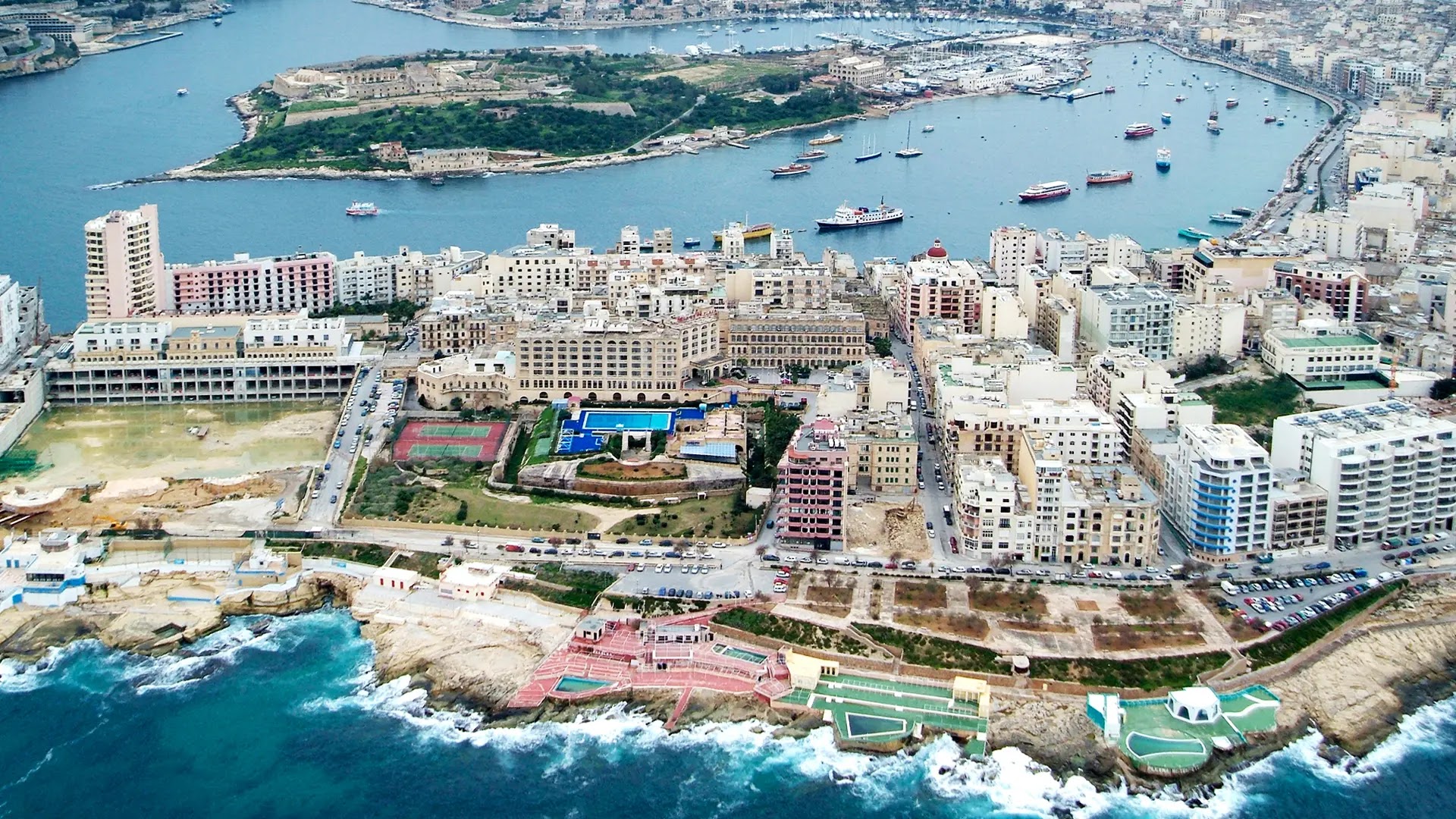
Sliema and its neighbouring towns—St. Julian’s and Gżira—have become the business and commercial heart of Malta. While that may sound like progress, the reality for residents tells a different story. What was once a peaceful seaside town known for its Victorian charm and Art Deco elegance has now been transformed into a dense urban sprawl, choked with high-rise apartments, relentless traffic, and unregulated commercial activity.

Plots of land once housing a single family now accommodate ten to fifteen households. Many of these are short-term lets, offices, or multi-car households, but few buildings offer enough garage space. Congestion has become unbearable. And while residents are expected to adjust, the government continues to favour business development over liveability.

Economic Growth Without Balance

For over a decade under the Labour government, the pace of development has been relentless. Sliema—already densely built—has been pushed to breaking point. The government’s focus has been on enabling growth and attracting business, while the needs of residents have been ignored.

A glaring example of this disregard was the suspension of the residential parking scheme—one of the government’s earliest decisions. In a locality where space is already scarce, residents suddenly found themselves in a daily struggle to find parking, competing with office workers, diners, delivery vans, and tourists. The resulting frustration is not only understandable—it was entirely predictable.

Local Councils Undermined

Local councils, the level of government closest to the people, have found themselves increasingly sidelined. Under Labour, there has been a clear trend of eroding local authority and replacing it with regional structures that lack sensitivity to local needs.

The 2024 Social Impact Assessment made this flaw painfully clear. Sliema was grouped with Birkirkara, Għargħur, and Lija—localities with very different challenges. Despite the quality of the academic work, the study’s relevance was diluted, and its findings have since been ignored.This kind of centralised approach does nothing for the residents who live with the consequences of poor planning every day.

A Questionable Motion from Labour

Against this backdrop, it’s difficult not to be cynical when Labour councillor Ryan Borg presents a motion for a Carrying Capacity Study just days after PN leader Dr. Bernard Grech announced a similar initiative. The timing alone suggests political opportunism. Mr. Borg even took to social media, claiming credit and implying Dr. Grech should have acknowledged his initiative. But gestures mean little when they come from representatives of the same party that caused the crisis in the first place.

Mr. Borg has also accused the Sliema Local Council—led by Mayor John Pillow and other PN representatives—of failing to cooperate with the government on reinstating residential parking. This, despite the fact that it was Labour that suspended the scheme in the first place. The council has, in fact, long advocated for its return. It is not cooperation that has been lacking—it’s government interest.

The Problem with the Motion Itself

Even the motion itself raises eyebrows. It includes no costing, no implementation plan, and suggests that the council should bear the financial burden. A second version of the motion had previously proposed a cost-sharing arrangement with the government and was expected to be presented alongside the mayor. But that plan was scrapped, and instead, a new version was tabled—seconded by the Labour minority leader.

Why the sudden shift? And what does it say about Labour’s sincerity?

A Responsible PN-Led Council

As a PN-majority council, we cannot accept a motion that asks us to pay for a study likely to be ignored, just like the 2024 Social Impact Assessment. If such a study is to be meaningful, it must be funded by the government. Only then can we hope it will be treated with the seriousness it deserves.

The claim that the council has the money to fund this alone is misleading. Our financial stability is the result of prudent management and responsible budgeting by previous PN-led administrations. These funds exist to serve residents, not to be wasted on motions designed for political theatre.

Our Position: Study, But Only With Commitment

Nevertheless, we are not against the idea of a Carrying Capacity Study. In fact, we see it as necessary. But it must be done right—led in good faith, funded properly, and tailored to Sliema’s specific situation. And most importantly, it must lead to action. Studies that sit on shelves serve no one.

Moving Forward for Sliema

Our commitment remains clear: to defend the quality of life in Sliema and to resist attempts to reduce the town to a commercial free-for-all. We will continue to advocate for planning that serves residents, not just developers and business owners. This town deserves better—and so do the people who call it home.


Tuesday, 4 June 2024

Local Councils and their detrioration under a PL government.


If we are to understand what local councils are meant to be, not what the PL government has transformed them into; voting for the PN should be everyone's natural choice. It is a known fact that the party that truly believes in importance that local councils have to the lives of people lives is the PN. Contrary to this, the PL government considers local government goes against what their true intention is, which is having more power in their hands to influence elections to their favour. For this reason, under a PL government we are experiencing the erosion of the local council, favoring a system that centralizes power. PL confuses local government with customer care, thus impacting the lives of people with inefficiencies that are avoidable in a truly decentralised system. The efficiency brought by a PN government in 1993 when introducing local council no longer exists, and is replaced with malfunctioning system, which ensures more resources to Labour leaning council as to make them look better. It is a system that runs through the present government and its agencies, one that is intended to trade in influence to the detriment of us all.

 The creation of regional councils was intended at bringing local councils of the same region to work together on projects that benefit that given region. The true purpose of regional councils was however betrayed when they became an excuse for the PL government to strip the local councils of their powers. From garbage collection to environmental management and infrastructural maintenance, these all happen to fall under the regional council. Typically, the PL government have sought to fool people by defining regional councils as one thing only to transform them into something completely different. The ultimate aim of coordinating and supporting local councils within the region was thrown out of the window, only to encroach projects that are supposed to implemented locally. Local councils have been blamed by some for the lack of efficiency in our towns and villages. Yet this lack of efficiency is coming to a large degree from the government, especially the Public Works and Infrastructure Malta. The inefficiency of these two entities has fallen on the lap of the Local Councils, especially those with a PN majority. 

If we are to take, for example, public gardens, their day-to-day maintenance falls under the local councils. However, landscaping projects fall under the responsibility of the Public Works. In other words, renovation in public gardens as is in Independence Gardens in Sliema the local council I form part of falls under  the Public Works. Moreover, public gardens also fall under the Ministry for the Environment, Climate Change and Planning or Parks Malta which is a government agency. Just imagine what the PL government and their agencies wouldn't do to undermine PN Local Councils and in this way fomment an anti-local council environment in the locality. Little do they care that it is we as Sliema residents who are suffering their dirty tricks. Fortunately, however, local councils with a PN majority as is that in Sliema refuse to fall for this kind of trickery, and are always there to put pressure on both Government Agencies and Ministries.

If we take major road works in Malta, these fall under the responsibility of the government agency, Infrastructure Malta. If we consider the way work is done in towns and villages that have a PN majority as is Sliema, one could see only inefficiency at its worst. A case in point is how Infrastructure Malta worked on the High Street in Sliema. There were times when the number of workers on the site did not justify the magnitude of the project. It took way too long for the project to be completed, and not to mention the damage made of people's properties. Had it not been for the pressure that a PN local council made on Infrastructure Malta, especially the Mayor John Pillow, I am pretty sure that the job would be still halfway through till this very day.   


Wednesday, 9 March 2022

Why Voting PN is Good for the Environment


 As we are approach the general election on March 26th, we are faced with two choices that will determine how our country will be governed for the next 5 years. We are either stuck with more of the same with Robert Abela as prime minister, or get the true change that our country needs with Dr. Bernard Grech at the helm of our government. The current brand of Labour politics has been far from innovative, stultified in the past, both in the way that it perceives our relationship as a country with the EU and the rest of  the world, and also  the way that our country is governed in general. The truly progressive party in Malta is the PN, with a track record that speaks for itself, and a electoral program that really caters for our country's needs. Amongst the many progressive pledges, one will find that there is a lot about repairing the environment in the PN's program, which also includes our international obligations with regards global warming.  

A good quality of life is what every government needs to cater for, and it is reasonable to argue that the present government has a horrible record on this regard. The PL government has spent the last 9 years in a construction frenzy, senseless planning, and an unprecedented greed for land and money. The mantra is that whatever makes money is acceptable, which has brought our country to a situation in which it is overcrowded due to imported cheap labour, dirty, and with limited open spaces to enjoy. Although the prime minister promised more open spaces in this campaign, the government's track record is there for all of us to see. On the other hand the PN is serious about making our environment one that people could enjoy. Open spaces are a must in a country that is as densely populated as is ours. With this in mind, the PN is pledging an increase of 50,000 square meters of ODZ land. It is important to create urban open spaces. However, it is wrong to come up with a plan that solely creates man made open spaces, without ensuring the existence of our natural environment as PL does. Moreover, every attempt by the PL government to create open spaces has led to more concrete and bland spaces, as is the main square in Paola among many others. On the other hand ODZ under a PN government is better protected, as what is being pledged is that there is a  need of two thirds of parliament for the development of ODZ land. The involvement of civil society on decisions having to do with the environment is also included in the PNs program, which is a step towards democratizing our environment.    

Reaching a target 80% of our country's carbon emission target by 2030 is another ambitious but needed target that a PN government will achieve. This is a pledge by a prospective PN government that will decrease the number of respiratory diseases, as well as contribute towards the fight against global warming. The PN are committed to reach targets not only for our country, but also for the entire planet. The EU made a commitment under the Paris agreement to the Secretariat of the UN Convention on Climate change to reduce carbon emissions by 55%, the PN is committed to this, because unlike PL their politics is about Malta in a wider world.       

Friday, 26 July 2019

Of Thugs and politics


The word democracy is being used a lot during a time wherein decisions need to be taken about the future of the PN. There are those who on the social media define democracy in ways that are worry, and act in ways that is definitely the antithesis of how a truly functioning democracy should be. The definition of democracy by those who vehemently support Adrian Delia is that once a leader is chosen he has to remain at the helm whatever happens. This is no democracy. They fail to realise that a true democracy is an ongoing process, and that if a leader fails to deliver, or his leadership is put to question by a reasonable number of activists, a new ballot is required.

It has been more about thuggish behaviour, crass language on the social media, and no substance at all, than a true debate on how we wish to see our party today and in the future. This opportunity to renew our party has become a platform for thugs to show how thuggish they are, and the myopic to manifest a trait that only brings stultification, and no good to our party and even less to our country. What politicians say about being close to the people has become chaos at its worst. It has become an excuse for party members who support the current leader to attack on Facebook all those who refuse to adopt a myopic attitude, and who are more inclined towards being constructive. Facebook is being used by Delia supporters to attack the activists, MPs and MEPs of our party. They are acting as their judge and executioner, and when all this happens no one in the current leadership bats an eyelid. This is the situation that our party is in. And, whatever the result is this Saturday, things will have to change if any progress is to be made to our party, and its prospect of becoming a stronger opposition is possible.

We cannot have thugs lurking in front of Dar Centrali, threatening journalists, and activists who do not share their unquestioned loyalty to the current leader. Under Delia's leadership, our party has become unrecognisable to what it was under past leaders, and not in a positive manner. The New Way is as negative as we could get. Adrian Delia hasn't brought progress to the PN. He has transformed our party into one in which MPs are followed and spied upon by his closest aids, threatened and ridiculed on private Facebook pages, and humiliated by a mob. He has created an environment in which activists are being called all sort of disparaging adjectives by some of those who have been part of his entourage ever since he decided to contest the leadership election in 2017. A look outside Dar Centrali bears witness to this

This comes with no surprise, when considering that Delia's rhetoric during the leadership election could be defined as nothing other than rabble rousing. When he became leader, his approach did soften to some extent. Yet, those who he holds close to him, his henchmen (so-to-say) still share the kind of bullish attitude that attracted them to him in the first place. His inaction has made the mob stronger, transforming our party from one wherein thoughtful debate happens freely, into one in which mob rule is rife. The idea of being close to the people and opening the doors of the Dar Centrali has become an excuse for mob behaviour. Moreover, the voice of the mob is given priority over that of the elected MPs, who represent not only the party members and activists, but all those who have voted for them beyond the party affiliations. The party is being held hostage by the mob, and their leader is no other person than Adrian Delia. For that reason alone Delia has to go.

Politicians are there to lead. It isn't the mob that leads, but politicians who look into their needs and come up with solutions. Being close to the people doesn't mean that everything they say or do is acceptable, or that politician should take their solutions as the solution to the problem. Politicians are there to find solutions to the problems, and to do so they need to understand what the problem is by being close to the people. Allowing the people to come up with solutions for the party, while rubbishing politicians in the process by calling them the establishment that should be thrown out was the worst thing to do during the leadership election. Delia sought simplistic solutions for complicated problems. This is so typical of the populist movements we are seeing today. The establishment includes the free press who were attacked by thugs in front of Dar Centrali.


Wednesday, 25 October 2017

Daphne Caruana Galizia, Maltese Society, and Partisan Politics


 Journalism is one of the most important pillars of our democracy, there is no denying it, as journalism is what guarantees that those who are supposed to live up to our democracy - those who are in power as are politician and influential individuals of  our society - are held accountable for their actions. Politicians should accept and also respect that journalists are going to be critical of them when there is the need to do so, and that it is their (the politicians') responsibility to prove to the journalists that they are wrong about what they are saying about them. And, if politicians are unable to defend themselves against what is being said about them, about their honesty and integrity, then they ought to resign from their respective positions. There should be no doubt allowed about the integrity of  politicians by those whose country it is their duty govern, nor should there be doubt on the integrity of those who are on the opposition benches in a liberal democracy, as doubt is what will subsequently bring a lack of trust of the political classes, which will not happen without repercussions to that same liberal democracy. Moreover, it also boils down to an issue of competence: imagine how competent politicians are at living up to the interests of their country and society, if they are unable to live up to their own interest in portraying their true selves as honest persons  (i.e. if what is being said about them is not true). And, it goes without saying that people who lack honesty and integrity should not even be trusted on more trivial matters, never mind politics. Daphne Caruana Galizia had written in her blog allegations that are more than unflattering towards some politicians, corroborated by documents, that albeit inconclusive if some want to make them so, make the position of certain politicians untenable. The untenable nature of their positions still stands today even that Caruana Galizia is dead, and even if these politicians decide to withdraw their libel cases against her, possibly to cover up their own alleged wrongdoings. From allegations of brothels to money laundering to failed promises of credible audits, accountability runs very low in our country,  too low for us to consider ourselves as a normal EU country. For this reason, one trusts that  Daphne Caruana Galizia's family will continue to seek answers, by being exigent that all the libel cases by politicians on her are brought in front of the court as planned. They have already done so with a minister, and for we should all be grateful to them for that, as they continue the fight that Daphne Caruana Galizia had started.  


 Malta is a hostile country to independent and investigative journalism, and also to journalism that requires some kind of thinking or discernment, as people are more inclined to being impressed by what they hold at face value. For this reason, some kinds of radio programmes go down pretty well with the general public, especially if these are of a partisan nature, and require no discernment at all, as opinions are fed to them ready cooked in the form of what one may define as propaganda. Unfortunately, certain kinds of blogs or newspapers (including foreign newspapers) that require more thought and discernment are only read by the very few, and there are some who would read them, because of the allegations they make against the foe of the party that they support. These blogs and newspapers are read by some when they are endorsed by the politicians who they support, and are attacked if they are attacked by those same politicians, or others who they have come to support. It is easier for people to listen to a one sided attack on the party, politician, or journalist they disagree with and come to hate, than to adopt an attitude of true analysis of a situation. And, moreover, we are a country that is happy with sermons and dogmatic speeches on the radio stations, and frown upon free thought or speech, especially when this goes against our parochial and partisan attitudes. People adore politicians, as if they were statues in our parish churches - demigods of an infallible sort, who ought not be questioned, as it would sinful to do so. The same attitudes of scantily dress young women on the shoulders of men of a macho disposition in parish feasts, is seen in mass meetings of our political parties, as these consider politics as if what matters are the piques that lie deep in our culture. With this kind of attitude, and with an inability of some form of discernment, what we get is an attitude that says that the only important aspect to politics is to win, over and above what is best for our country and for the future generations, as it is good to celebrate in the way they do in their parish feasts, and the more satisfactory to spite one's own adversary. Our choice of a leader is based on whether our party will win or loose under his/her leadership, not on the principles that should guide our choices for a common good.

Some people find Caruana Galizia's pictures taken of random individuals at mass meetings or elsewhere, and her comments on the way that they were dressed and/or even behaved as unacceptable. Those who are critical, especially those on the left of our political spectrum, believe that this kind of journalism is prejudiced and brings class hatred into the equation. I am sure that that wasn't the intention of Caruana Galizia. Albeit there might be some truth in their criticism that it isn't right to invade one's own privacy, I can also see a failure on their part to understand what stood behind those pictures i.e. a critique of and against the parochial attitude ingrained in our culture - the macho culture of some men, and the submissiveness of certain kinds of women. She never limited her critique to class, as one may see from her commentary and photos of ministers, members of the opposition party, as well as businessmen/women. Caruana Galizia was critical of the same aspects in society that her own critics were also being critical of. The difference was in the way she did it.

We may see how some politicians do thrive on the attitudes that Caruana Galizia used to hate. The problem is that that kind of attitude is widespread and dominant in our culture, and that it is difficult for any journalist to promote a kind of position in society that goes against this ingrained culture. During the past decades, Caruana Galizia's blog was perceived as if it were a beckon of truth by people who supported the P.N, and was seen as the opposite by those who supported the P.L. Some of those in the P.L who were against what Caruana Galizia spewed hatred against her, calling her a witch, threatened her, and used all kinds of violent adjectives to describe her. Then came the leadership election of the P.N., and some in the party stopped supporting what Caruana Galizia had to say before the general election, and blamed her for the P.N.'s drubbing in the 3rd June general election. Rightly or wrongly, she was  critical of Adrian Delia who then became party and opposition leader after winning the leadership election. At that point we began to witness the same kind of violent attacks on the social media by the supporters of Delia. The attacks were no different to the venom that spewed out of those on the other side of fence, it was the same kind of venom by different people belonging to the same culture of parochial ignorance.


Thursday, 12 October 2017

Who is harming the P.N.?


Sometimes I expect too much from people. Then I am befuddled by what they say, and I think to myself - and sometimes think so aloud on the social media - that there are people who are just unable to grasp things as they stand. We can all see  - i.e. if we are not too  myopic to do so - that there are a significant number of people who are just not convinced by Adrian Delia's leadership. This is a fact that cannot be denied, and whoever does deny this fact, or tries to give an impression that this is not the case by stating that there has been 600 new members in the P.N. are living in a parallel universe that few people know of. We need to face the facts, even if they hurt, or are so unpalatable for us that we manifest our denial and anger with an indignation that sounds more like a tantrum than anything close to somber or constructive reasoning.

In no way am I suggesting that because of this haemorrhage Delia must go. It goes without saying that it is only fair to give the man a chance to prove himself. My point is that there are people who support Delia who are harming him unknowingly - and the party also - and who are so blindly livid, or possessed by a paranoia of an acute kind that they are unable to understand that what they are doing or saying is what is leading to what they themselves are dreading. I will state fairly and squarely that telling people to join the P.L., because they do not support Delia is stupid to say the least. Don't these people realize that if doubters leave the P.N. altogether, there is little chance of any kind of inroads in the next electoral challenge in less than to two years time? Don't they realize that intelligent people do not follow leaders at all cost, and that honourable people are those who are true to themselves? It seems that they are unable or unwilling to reason that way, and for that reason, I am able to state with a degree of certainty that their attitude is what will be the downfall of the P.N., not those who are critical, and who are entitled to be so. You do not tell an intelligent person to shut up, without repercussions.

My advice to Adrian Delia is that he should attempt to calm people down, by telling his own supporters - obviously by persuading them about the harm they are inflicting to his leadership and the party - to stop kinds of comments such as: "you are negative for discussing the idea of a free vote in parliament" or worse still: "you are annoying a lot Nationalists, because you are giving an opinion". People are entitled to an opinion, and a debate on issues of different kinds should transcend the walls of the Dar Centrali. If you want to bring politics to the people, the worst thing you can do is to treat the leader of a party as some kind of titular statue in a village festa, or attempt to shut people up, or worse still, expect everyone's brain activity to be so backwards that the only contribution that they could give to a political debate is: "Delia!!! Delia!!" That's not what the P.N. need. The P.N. should be in the kazini, the grocer etc., but must also be a party that accepts constructive criticism by people who support it. The P.N. should not be a monastery, wherein things are done behind closed doors. The P.N. should be a party that embraces criticism, and is so close to the people that doubters are contacted, and given a voice in within the party. I will advise Delia that it is easy to be liked by some people, because notwithstanding the fact that you are the leader, you seem to be one of us or them - depending on how you see it - by making coffees in kazini, and playing table tennis, or billiards with students. However, you might also need to address the more difficult task of speaking to those who are less easily persuaded about your qualities.


Tuesday, 26 September 2017

Robert Arrigo for Deputy Leader


Robert Arrigo has been working for the good of the P.N. for a long time, even during times when things weren't that good for the party and for himself. If politics is to described as a service to the people, then Robert is one who has definitely excelled in that. His way of looking at politics has always been that of being close to the people. And, knowing what the needs of people are, is of utmost importance in politics, as there is nothing in life that is more important than one's own well being in society. As a party for the people, of the people, I believe that Robert really epitomizing what our party stands for.

His view of politics is that we need to understand people, empathize with their needs. Visiting people in their homes is a must in politics, as it gives a politician an idea of what people go through in their daily lives. A politician who is capable of doing this, is even more capable of bringing people together in a political party. This is very much need at this point in time for the P.N., after a leadership election which was intense to say the least. And, I am sure that Robert fits the bill in bring people together. 

To bring people back together, what is needed is someone who is capable of communicating with others, as Robert is surely capable of doing, as one could see from his popularity in the 9th and 10th district. And, I believe that having him as Deputy Leader on party affairs is what the P.N. need at this point in time to bring togetherness back to the party. 

Moreover, Roberts organizational experience, as we can all see in his past business experience and his position as Sliema mayor, will come handy for the P.N. to restructure itself further. A lot of good work has been done during these past 4 years, especially in the party's finances, and it is  important that we have people who could continue to enforce the good work that has already been done.   


Wednesday, 20 September 2017

On honesty and democracy: the P.N. leadership election result


I consider honesty and integrity as important in politics, as it should be in everything we do. However, there is another aspect to politics which we should all cherish, and work for, which is democracy. One of the reasons that I did not want Adrian Delia as leader of the P.N. was because of the allegations that were being said about him. Allegations are allegation, as there is no proof to say whether they are true or false. However, allegations are also a liability to any politician, and Delia is no different in this regard. And, it is for this reason that I have always held that he should clear his name, as not to embarrass the party. My opinion has not charged in this regard since then. I still believe in the necessity of transparency.

On the other hand, I believe that democracy is as important as ethics in politics. Democracy guarantees that the will of the people is respected. Democracy also ensures that minorities are not sidelined by the majority. And, this is even more the case when considering that nearly half of the voters in the election for leader last Saturday voted for Chris Said not for Adrian Delia. This obviously means that Delia, as the new leader of the P.N., needs to ensure that he brings back to the fold those who did not vote for him, and who went as far as to tear up their membership of the party. This is the first test for Delia as the P.N. leader. There are two of things he needs to do to bring back these people to the fold, and if he doesn't  do so, he would definitely fail to bring the party back to its feet again. The P.N. needs to unite behind the leader, if it is to become strong again, and the leader should do what he could to bring everyone on board.

The first thing that Delia needs to do is to persuade each and every member of the party that he knows of who has shown disappointment by tearing his/her membership, by speaking to them individually. He needs to win their trust. He can only do this by proving to them, beyond all doubt, that all that has been said about him is untrue, without seeming too offended or defensive when doing so. The second thing to do is to explain more clearly that he is not an anti-establishment politician of the kind as Donald Trump, and that he is prepared to work with everyone, even those who have been very much against him during the campaign. If Delia manages to do this, then I believe that he stands a good chance to unite the party. I am sure that most of those people who have torn their membership will eventually warm up to him to the benefit of the P.N., and even the country that needs a strong opposition.

On the other hand, it is important that we all accept the choice of the majority. This is done by considering it as a clean slate for Delia, and allowing him to prove that he can really bring the P.N. forward. It is way too early to judge what kind of leader Delia is going to be, and it is important that we all give him a fair chance to prove himself. I am prepared to do so. Are you?